
Regional Blocs of African Landlocked Countries
Africa's 16 landlocked countries are members of key regional economic communities that shape their trade, infrastructure development, and economic integration. Select a bloc below to explore detailed analysis.
East African Community & IGAD
East Africa
Landlocked Countries in East Africa
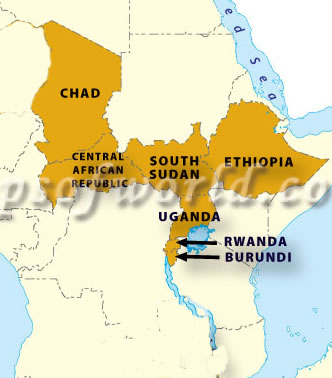
East Africa hosts some of the highest concentrations of landlocked countries on the continent; including Uganda, Rwanda, Burundi, South Sudan, Ethiopia, and in some regional classifications, Zambia. The absence of direct access to the sea strongly influences trade logistics, industrial development, and regional economic integration.
These countries rely on key maritime gateways such as the ports of Mombasa (Kenya), Dar es Salaam (Tanzania), Djibouti, and Port Sudan to access global markets, making transit efficiency and regional cooperation essential to their economic sustainability.
Landlockedness in East Africa is closely tied to high transport costs, infrastructure deficits, and exposure to external shocks along transit corridors. Lengthy customs procedures, congestion at ports, and security challenges can significantly disrupt supply chains; particularly for time-sensitive and high-volume goods. As a result, regional frameworks under the East African Community (EAC) and Intergovernmental Authority on Development (IGAD) play a critical role in improving corridor management, harmonising trade procedures, and promoting cross-border infrastructure investments.
At the same time, East Africa's landlocked countries occupy strategic positions within some of the continent's most dynamic trade corridors; linking the Indian Ocean coast to the Great Lakes region and the Horn of Africa. With sustained investment in multimodal transport, trade facilitation reforms, and value-chain development, these countries can reduce the structural constraints of landlockedness. Strengthened cooperation between coastal and landlocked states remains vital to achieving inclusive growth, regional stability, and long-term economic transformation in East Africa.
East Africa Regional Map
Landlocked Members
Coastal Members
Key Transit Corridors
- Northern Corridor
- Central Corridor
- Djibouti-Addis Ababa
- Mombasa-Nairobi-Kampala
The Importance of Regional Integration
For Africa's 16 landlocked countries, regional economic communities are not just political groupings—they are essential frameworks for survival and prosperity. Without direct access to the sea, these nations depend on regional cooperation to access ports, harmonize trade procedures, and develop shared infrastructure.
Each regional bloc has developed specific protocols and programs to address the unique challenges faced by their landlocked members, including transit transport corridors, customs harmonization, and infrastructure development.
Use the tabs above to explore detailed information about each bloc's landlocked members, key transit corridors, and regional integration initiatives.